
Sunday, December 13, 2009
Intercultural- Application
In the movie Borat, there are many cultural differences that Borat is unaware of. He does things that are obviously not socially acceptable in our country and he does not know that the are wrong. He does many inappropriate things and people are appalled by them. In his home country, things are obviously a lot different than in America and if we study how people there live we would be able to communicate better. Borat is unable to communicate positively with Americans in the movie because he is lost in the cultural barrier and does not know what to do when he comes across a problem. For example, he has a very crude sense of humor and many people don't accept this in our country. When he would say these things people would get very offended but they didn't realize that he does not know what is appropriate to say around people you don't know.

Intercultural- Personal
In my experience of dealing with other cultures, I have found that it is very important to be civil and not become angry when they don't understand what you are talking about. I have many relatives in Ireland and have visited there four times. When talking to my relatives we often come across words neither of us know what the other one is talking about. When this happens we have to talk and talk and talk about whatever it is we were trying to describe just to cross the cultural boundary. They have different words for things in Ireland, such as "disco" means "club" and I have never heard about that before. These cultural differences can be overcome by defining what you are talking about and seeing if there is a word in there culture for it. I have had to deal with many of these cultural differences with my relatives and we have overcome them. The cultural differences are vast between the US and Ireland and I have learned a lot from their culture and about my ancestry.

Intercultural- Definitional
The principles of intercultural communication guides the process of ambiguous and meaningful communication across cultural boundaries. We study intercultural communication in order to understand the differences between cultures. We do this in order to preserve mutual respect between cultures and and reduce antagonism with them. We also need to better preserve respect that exists or could exist with those cultures.
A culture is defined as a shared system of symbols, beliefs, attitudes, values and norms of behaviors. According to Tubbs and Moss, a culture is a way of life developed and shared by a group of people and passes down from generation to generation. We learn about cultures through experience, and guidance of others. It is not something that is innate because we learn it through social interactions with each other. Having a culture helps us to organize and predict behaviors out of different individuals. Improvements in intercultural communication and the way that we transport technologies have made it possible for unstable cultures to come together and meet in unstructured situations. Our experiences tell us that crossing cultural boundaries can be threatening but if we study this communication and know how to positively do it we can have better outcomes. If communication is not done correctly there can be volatile and explosive situations that erupt between cultures. Some cultures even believe that the phenomenon of globalization has reduced cultural diversity and when this has been reduces the differences and misunderstanding are reduced. Intercultural communication is very important in determining how different cultures communicate. If we did not study this type of communication, we would all be very confused and lost when talking to another culture.
Sunday, December 6, 2009
Mass Media- Applicational
Shape magazine is an example of mass media because it is communicating to all of the women of the world that want to get perfect bodies. Besides having exercises in the magazine, it also talks about different womanly problems that we deal with in our daily lives. There are articles on how to eat healthy and how to have a healthy relationship with your significant other. There are many readers that write into this magazine as well with questions that are answered by the editors of Shape. Their questions are general knowledge that all women are curious about but too afraid to ask. This magazine provides all ages of women with answers to questions regarding a broad range of topics. Most notedly the magazine focuses on having a healthy well being and a positive way of life. This magazine is a positive form of mass media for women to read and feel better about themselves.

Mass Media-Personal
Mass media has personally affected my life today because of the strong presence it has in our society. There is always something on the cover of a magazine that is showing how to get fit or "what's hot for this season". All that the mass media is conveying to us is instant gratification and how we can improve our lives by purchasing things. And although I have been a victim of the influence of the media, in someways it has been a good influence. The media has made me get in better shape for example. I've learned many new exercises from Shape magazine and websites that are stating that they have the latest and greatest way to get fit. This has helped me in my daily life to feel better about myself and to become a happier person. The media is not always a good influence though. It can influence you to purchase things you don't need and to waste your money on items that are useless. This side of the media happens to a lot of people and they ultimately become unhappy. The internet can also become addictive for some people. They will spend all of their time in front of the screen, whether it be online shopping or Facebook stalking people, they become addicted to the feeling that the internet produces for them. This has even happened to me before, sitting in front of my laptop screen for countless hours doing absolutely nothing with my time. Mass media can influence our lives in a positive or negative way, and it does so on a daily basis.
Mass Media- Definitional
Mass media refers to a particular class or section of the media that is specifically designed to reach a large audience. Example are magazines, television, news programs, and radio. The audience has a lot to do with how mass media is reached. Mass mediated communication can form its own society with its own characteristics but the audience is going to have a lack of social connection. In our society today, we lose connection with each other because mass media is taking over our lives and we lose the social connectedness that we once had. And when we lose this social connectedness, the individual is more susceptible to advertisers and propaganda. Some scholars have determined that mass media is the hardest to determine whether it is true or untrue. This is because it is bias and we don't know who is sending the message typically.
The way that Wright defines Mass Communication is as follows: the audience is relatively large, it is diverse, the audience is anonymous to the source, the experience of communication is quick, it is public, it is fleeting (spreads and disappears quickly), the source works through a complex organization, the source is not isolated, and the message reflects the efforts of a large group of stakeholders. According to Grossburg there are three different types of media that are present in our society. The first is interpersonal which is a cell phone and you have control over the audience and there is more power in the relationship with this type of media. The second is mass media, or newprint, and there is unequal power in this because the media has control over you. And lastly is a network, like Facebook or fax machines and this is a beneficial form because people can communicate from different countries and still get the same message.
The media plays a role in the construction of reality in the technologies, the institutions and the cultural forms. The way that it affects the technologies is that it is a physical means of producing the message. In the institutions it is any large scale entity that embodies social relationships and functions that was created by human beings to perform a function in society (religious, film industry, etc.). And in the cultural forms the media affects how the products of media technologies and institutions or organizations are structured (by codes, languages, symbols).

Tuesday, December 1, 2009
Small Group- Applicational
In the television show It’s Always Sunny in Philadelphia, there is the example of a small social group. The “gang” is Dennis, Dee, Mac, Charlie and Frank and they work together to run their bar. They have many problems come their way but they solve them in very unconventional ways. They improve their relationships with each other in this show by hanging out at the bar but they also solve problems like a work group does. This show has an example of each type of a small group because of the different episodes. In some episodes they are teaching each other different things but then in other episodes they are in a self directed group by managing themselves and participating on equal levels.

Small Group- Personal
In my educational career, I have participated in many small groups for school projects. These would be considered work groups because we are all working towards a common goal. In high school I worked on many group projects but I never really enjoyed them because one person was always stuck doing all of the work. I think this is unfair because then everyone would get the grade that one person worked for. Although I didn’t always get stuck doing all the work, I have had my fair share of bad group members. Small groups can be effective for many projects and I have been in many groups where the work has been shared equally. For example, in my chemistry lab group we shared the work equally because if we didn’t, our lab would not get done correctly. Everyone had a job that they had to do because we were restricted on time. This group consisted of 4 people and the jobs were easy for the most part. Sometimes I like small groups but other times I don’t because the members don’t take responsibility for their jobs.
Small Group- Definitional
Small group communication refers to the nature of a type of communication that occurs in groups (usually 3-12 people) and takes place in a context that mixes interpersonal interactions with social clustering. It is sometimes difficult to define a small group because they have to have a communication action. The characteristics of a small group are as follows: there has to be interdependence between group members, the communication patterns between members become predictable over time and there is an emergence of norms and roles of group members. The group must also serve a function and be a rewarding place or experience for each of its members. There is a level of satisfaction each member should experience. And the members must perceive themselves as a part of the group.
There are 4 basic types of groups. There are social groups that have the purpose to improve relationships and people spend time together as a group. In learning groups the members zone together and teach each other about a particular subject. In work groups there is a specific goal and the group members all bring their level of expertise to the table to achieve the goal. The last type of group is a self-directed group and these groups naturally form and are managed on their own. The leadership is not strong and everyone participates on an equal level.
Sunday, November 8, 2009
Health Communication- Personal
In my experience with doctors, I've come to realize that some are good at communicating what is important and others are not. I have dealt a lot with a neurologist because I have migraines and I always have to ask a lot of questions when I have appointments. A typical appointment begins with them taking my height, weight and the circumference of my head. Then I wait for the doctor in one of the rooms that I am so used to. They have a specific list of the questions that they need to know from me, but when they are finished diagnosing me, I have questions about my own health as well. They sometimes tend to forget that I would like to know what is wrong with my head and if it will ever be okay again. My doctor asks me questions about the number of headaches that I've had since my last appointment and to rate the severity of them.
I've also had an EEG and a sleep study performed on me, and both of those events required a lot of communication between the doctors office and my mother. Whether it be numerous phone calls to get the right location of where the appointment is taking place or when the appointment is, my mom would be very frustrated with my doctors office. Their way of communicating was not always the best but when I would have an appointment, the doctors would help to get rid of my migraines. The severity of the migraines has gone down but I still continue to have appointments to regulate my medication and to see if anything has changed. The fact that the doctors office still checks up on their patients is very important and shows that they actually want to help people to get better.
Health Communication- Application
In the movie And the Band Played On, health communication is a very important part of the movie. The researchers in the movie are trying their hardest to discover what this new virus is that is killing so many people very quickly. They have to track friends, family and the sexual relationships of the patients they are dealing with in order to rule every possible scenario out. The majority of the people infected are gay men, so that is a start for the researchers to discover that the virus could be spreading between homosexual relationships. The research that is being done to help the cause eventually leads to homosexual bath houses as a potential risk to catching this new disease. The gay community does not want to shut these bath houses down because they feel like they are being discriminated against. The doctors discover with the help of another researcher from the Center for Disease Control who has been working on feline leukemia, that the new outbreak is AIDS.
The theory of planned behavior model can be seen in use in this movie because of the three factors that must determine a persons intention. The pros and cons have been weighed by the people performing the research of this new outbreak and they feel that their intention to help the population is greater than protecting the feelings of some people. The subjective norm is shown through the social pressure from the gay community to discover what is killing so many people so quickly. It is also shown through the friends and family of the people that have been diagnosed with this disease or that have already died from it. And the perceived behavioral control is shown through the confidence of the doctors that they can discover what this outbreak is and that they can contain it.

Health Communication- Definitional
Communication in health happens on many different levels, individual, group or mass-media. This type of communication is defined as a resource that allows health messages (prevention, risk, awareness, etc.) to be used in the education and avoidance of sickness. There are 3 theories that are used in health communication to explain how messages are conveyed between people in the health field.
The first is the theory of planned behavior. This theory has three components, attitude, subjective norm and perceived behavioral control. They all connect to the middle which is behavioral intentions. Behavioral intentions then connects directly to behavior. This theory states that the main determinant of behavior is based on the persons intention to perform said behavior and their intention is determined by three factors. The first is the attitude to the behavior or the pros and cons of that behavior. The second is the subjective norm or the social pressure from significant others and the third is the perceived behavioral control or the perception that the person has about their ability to perform the behavior.
The second theory is the health belief model which is used as a pattern to evaluate individual change. This model of communication suggests that a person's behavior can be predicted by the basis of how weak or vulnerable they consider themselves to be. The person has to weigh the benefits and negative aspects before performing a behavior because of their vulnerability needs. There are four factors that need to take place in order for a behavior change to occur. The first is the person needs to have an incentive to change their behavior. The second is that the person must feel that there is a risk if they continue their current behavior. The third is they must believe their change will have benefits and the fourth is the person must have the confidence to make the change.
The stages of change model is the third theory. It is shaped like a wheel and suggests that people make changes to their behavior at certain stages of their life rather than making one major change. The order the cycle goes in is pre-contemplation, contemplation, readiness to change, action, maintaining changes and relapse. A person can start at any of the stages and choose to move to the next stage at any time. This model is very appealing because of the simplicity of it. It was originally designed for smoking interventions but it has been used for promoting fruit and vegetable consumption, injury prevention and physical activity promotion.
All of these theories can be used to describe health communication and how people communicate in the health profession. These help us to understand how health care providers help people gain better information in order to get the best treatment possible.
The Theory of Planned Behavior Model:

Sunday, October 25, 2009
Organizational Communication- Applied
The company that my group made was a privatized comedy television station called "Kicks n' Giggles" that was based of of the Bet-Your-Company-Culture. Our main goal was to achieve higher ratings than other stations with the different televisions shows that we air. The main shows that we will show are sitcoms and movies, mainly of the comedy and dramady genre.
The leadership hierarchy that we have will have a CEO at the top who is driven and able to communicate well. Below him or her will be a board of directors and then below them will be a board of supervisors/representatives and then at the bottom will be all the technical employees. They will all report any problems to the people above them and they have to be able to communicate well with everyone. They must be open-minded to each other and new ideas as well. We will have meetings where everyone can give their input for new ideas. The type of communication we will use is non-controlling and downward. We will also have promotional rewards to help keep the morale of the office up and people working hard. Wacky tie wednesday is also a must here at Kicks n' Giggles!
Organizational Communication- Personal
In my experience working at a restaurant in Phoenix called Market Bistro, the manager that I had used supportive communication and was always open to talking about problems in the workforce. She would help anyone to solve problems that had arisen while at work and even developed a system of rewards for the employee that worked the hardest that month. The employee that worked the hardest and showed the most effort was rewarded with a $25 gift card to their choice of place. This system helped to create a positive morale in Market Bistro and made the employees more happy and we had a stronger desire to work harder. My manager was about 23 and this made it easy to talk to her about problems that were going on or something that had happened while I was at work. She was very involved in working with all of the employees below her in order to gain a better understanding of them and how they felt in the work environment.
In order to communicate effectively, we also used notes left at the register and on the schedule where people would see them. They were normally about if something had changed about the schedule or if we were out of a specific food for phone orders. This helped create a better communication style though because it was always right next to the register for me to see whenever someone called in a phone order. This type of organizational communication was a great help to the restaurant and provided them with the much needed tools for being a thriving bistro.
Organizational Communication- Definitional
In organizational communication, there are four types of organizational cultures that exist in different companies. These different types of cultures show how people interact in the workforce and the different types of leadership that go with them.

The first type of culture is Tough-Guy-Macho-Culture and this normally exists in high-risk organizations like police departments and surgeons because they deal with life and death situations. Other places where this type of culture is used are management consulting and venture capital firms where they make fortunes yet lose them at the same time.
The second type is the Work-Hard-Play-Hard Culture where the organization focuses on the sales and maintaining the customers needs. Some examples of this culture are IBM, Xerox and Hewlett-Packard. This culture also uses celebration to keep energy and motivation up so the workers continue to do their job well.
Bet-Your-Company Culture is the next type of organizational culture and this requires that you endure high risks but slow feedback. Large oil companies invest millions of dollars in exploring places for oil before they see any success or failure. Same goes for NASA, mining companies and the military; they all invest in something without seeing feedback for quite sometime.
Process culture is the last type of organizational culture and this is a low-risk, slow feedback culture. The types of companies that fall into this category are mainly pharmaceutical firms and other highly regulated industries. The people that work in these cultures hardly ever see the results of their work. The main focus is on the process of how to get things done. There is a lot of communication between the employees, whether it be through meetings or memos.
All of these cultures are used in each company that is in our world today. They are very important to the organization of the different workforces that are present in our community. Without these different organized cultures, there would be much difficulty communicating with the people inside the business.
Sunday, October 11, 2009
The Nonverbal Message- Application
The facial expression is one of the key factors in nonverbal communication and in an episode of Its Always Sunny in Philadelphia, Charlie is "the wild-card" of the group. The gang is trying to get a loan from the bank and they each have a key role that they are going to play when they go to the bank to talk to the loan adviser. Charlie decides he wants to have a "wild-card face" to get the point across that he's the one that can do anything in a moments notice. He practices a few faces that obviously show that he is not a "wild-card" and goes to practice more. The point of this is that he wants to use nonverbal communication to show his role in the group at different points of the television program. Dennis and Mac make fun of his facial expressions and ask him what he is trying to tell the people with his face. This is a valid question because that is the whole point of a facial expression, one is trying to convey something without words. So when Charlie practices his facial expressions, he is able to communicate between others without words and he has a successful yet weird "wild-card" face.

The Nonverbal Message- Personal
With the nonverbal message, facial expressions also plays a large role in communicating between people. People have told me that I always use facial expressions when I'm communicating with them. Apparently I have a "signature Beth face" that I do whenever someone says something that I don't agree with or think is dumb. It's just a blank stare that I give them and then they say "Don't give me that look!" because they know what I'm thinking by the facial expression that I do. Facial expressions play a big role in my communication style because I tend to use them with everything that I say. I also raise my eyebrows a lot for a look of surprise. I think that the different facial expressions that I do daily are very interesting and say a lot about who I am and what I think because they directly match my personality. For example, I also have a facial expression that I use whenever I say something sarcastic. Some people don't always pick up on this and it confuses them when they don't understand the underlying sarcasm and what I'm actually saying. Learning to read facial expressions can be difficult, especially mine because I have so many of them and I use many different ones so often. Often times I will only respond to things with a facial expression at first and then I'll say something if the person doesn't pick up on my mood right away. There are so many different uses for facial expressions. They can convey a mood to someone and change the situation of a conversation instantly. I really enjoy the use of facial expressions and I like to see how many different ones I can use and confuse people with.
The Nonverbal Message- Definitional
With the nonverbal message, space plays a key role. Proxemics is the study of how human beings communicate through their use of space. There are 4 different types of space that we consider appropriate. The first is personal space which is a person's portable territory and we carry with us wherever he or she goes. The distance for personal space is 1.5-4 feet and the voice that is used is soft and slightly lowered. The message that is portrayed is a personal subject matter. We defend our personal space with our personality and communication style. With personal space, we also have a greater feeling of confidence when we are within our own surroundings.

Intimate distance consists of a space of 18 inches or less. The voice that is used is a soft whisper or an audible whisper and the message that is conveyed is either top secret or very confidential. The presence of another person may be overwhelming and unmistakable at times because of the stepped up sensory inputs. The distance of 6 inches or less is usually reserved for close friends and family. People generally tend to avoid close contact with people if they do not know them as well as they do with others.
Social distance is a psychological distance that ranges from 4-12 feet. This distance is suitable for talking to people at a party or something of the like. The voice that is used in this situation is full and with slight over-loudness. And the message that is trying to be conveyed is non-personal information or public information for others to hear depending on the phase you are in. The social distance has been extended by telephone, television, email and teleconferencing. In this type of distance, anxiety is frequently able to be present.
The last type of distance is public distance. This is 12 or more feet of space and it is the largest of the zones. This only exists in human relationships and the styles of public relationships vary drastically between Americans and Europeans. This style of distance is frequented in public speaking because they vary their body movements and gesticulate to get their point across to those listening.
These four types of interpersonal distance make communication between people easier for them to discern between people that are easy to talk to and that are not.

Sunday, September 27, 2009
Gender Communication: Application
In the movie She's The Man, Amanda Bynes is a girl that wants to play soccer at her school but they cut the girls soccer team. Her boyfriend tells her that boys are way better at sports anyways and that she should just quit and not worry about it. But she's not about to give up something that she loves. When her brother Sebastian decides to go to Europe to play music instead of attending his boarding school, Viola (Bynes) sees this as a perfect opportunity to attend his school, and impersonate him. With the help from her friends and a really good make over, she pulls it off. She does this so she can play soccer and show everybody that girls are just as good as boys at sports. When she makes the team, and is almost better than a lot of the guys on it, she knows that she has succeeded at what she has done. In the biggest game of the year against her ex-boyfriends team, she scores the winning goal as true herself (a girl) and shows everyone that girls are equal to boys. By not giving up and sticking to her goal, Viola is able to demonstrate the equality that women should be given. This is also gender communication because her older brother's girlfriend is the "typical girl" who is into frilly dresses and shopping and make-up and Viola is being forced into doing the cotillion. She really doesn't want to do this but it means so much to her mom so she does it for her. Viola is the epitome of a tomboy in this movie and people are forcing her to act more ladylike. This is wrong because she should be able to decide for herself what she wants to do and how she wants to act. Gender communication is demonstrated heavily in this movie and if you haven't seen it, I highly recommend you do. 
Gender Communication: Personal
In my life, I have been nourished by both of my parents. I am attached to my mom, but as well as my dad. When I was younger, I played every sport imaginable, but I also danced and did the typical girl activities. Because both of my parents gave me the two different gender influences, I had equal guidance on what I could do. Since sports are typically seen as a masculine thing to do, my dad wanted me to break the mold of that a play them. I played softball, basketball, volleyball and soccer and even did karate. I think that partaking in all of these "masculine" activities has made me a well rounded person. But then on the flip-side I also did ballet, hip-hop, jazz, Irish step dancing and tap. These are typical girl activities that my mom liked for me to partake in. Both of my parents didn't care what I did as long as I was happy. And having an older male cousin influenced me to do the boyish activities as well. I wanted to be like him in every way possible. I would dress in boys clothes and wish I was a boy sometimes because they seemed so much cooler than girls. I think that the difference in gender communication is how your parents choose to raise you because they have the greatest influence on your life. Today I am not overly boyish or overly girly, I like to think that I can equally relate to boys and girls because of my experiences that I had when I was younger with both sexes. I have best friends that are girls and I have best friends that are guys. Being able to relate to both sexes is a benefit because if you have a problem you can get the opinion from two different ways of thought. For example, I just broke up with my boyfriend and it was very helpful having my guy friend be there and give me advice on what to do. He was able to tell me what my ex might be thinking about the situation and it has really helped me. But my best friend thats a girl has a completely different view on the situation and gives me different advice on what to do. So although it is very confusing having two people giving me two different sets of advice, it is also very helpful. Gender communication has been a very large part of my life and especially recently. Growing up and being exposed to both males and females has been a huge help to having to relate to people and their problems.
Gender Communication: Definitional
In gender communication, there are seven psychological theories that can explain the differences between gender development. The first theory is the Freudian identification theory which originates in Freud's psychoanalytical theory. He believed that the type of identification experienced by a child would determine if it was a male or female. Male development was controlled by defensive identification which is fear of retaliation from a powerful figure. And female development was a result from a fear of a loss of love or anaclitic identification. When a child associated with the same sex parent, that is how they acquired the appropriate behavior for their gender. Freud notes that "sex differences in behavior were seen as the direct irreversible consequence or perceived and actual anatomical differences" (Stewart). This theory has been criticized saying that women are biologically inferior to men. Frieze and his associates have concluded that this theory has a masculine bias because women are seen as inferior to men. Many psychological theorists reject this theory and believe that our gender is structured through interactions in society. 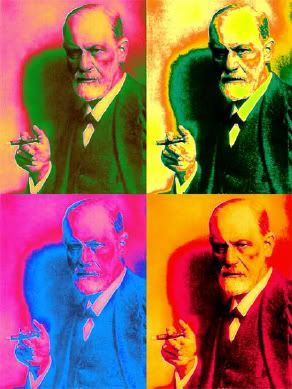
This leads to the second theory which is the social interaction theory. Socialization is the process by which children acquire the values and behaviors seen as appropriate to their behavior. This theory has been examined by the psychologist Bandura who believed that sex role distinction occurs right after birth when the baby has been named and then when the baby has been adorned with sex-appropriate clothes, hair styles and activities. The systematic attempts to influence behaviors of males and females begins at birth. The two major theories that attempt to explain gender from the perspective that the impact of socialization on gender. They are social learning theory and cognitive development theory.
The social learning theory has has information provided by both same-sex models, both at home and in the media, along with reinforcement for gender appropriate behaviors from significant others. This theory shows that what the female duties are (i.e. housework, cooking, cleaning etc.) and what the male duties are (i.e. yard work, fixing the car, going to work etc.). Children adopt gendered behaviors when they are rewarded for doing culturally fitting behaviors and punished when they do not.
The cognitive development theory claims that a child's concept of gender doesn't fully develop until they are about five or six years old. They don't know yet that a persons gender is a permanent thing and it doesn't change. At the stage of being five or six, they begin to seek out gender constancy because they have developed a sense of understanding that gender does not change. Little girls want to be like their mothers and little boys want to do everything that their father does. Cognitive development theorists believe that children play an active role in their own development because they seek out information that they think will help them improve their interaction with the world.
The social roles theory is gender identity in terms of role related behavior rather than the learning of individual or secret behaviors. Social roles are sets of behavior patterns that define the expected behavior for individuals in a given position or status. So to be a teacher, you must have students and to be a parent, you must have a child. The process of gender development for girls is identifying with their mother and the same for boys except with their father. Symbolic interaction suggests that individuals develop their view of self from their perceptions of their expectations of significant others. Social theory suggests that the development of gender is the result of reinforcement or encouragement of appropriate behaviors.
The moral voices theory is that early social environment is experienced differently by male and female children and this experience leads to different personality development. Females attach to their mothers and develop a strong bond with them whereas males develop a strong bond with them as well, but have to break away from them in order to develop a sense of masculinity. Masculinity is defined by separation while femininity is defined by attachment. This is why males have difficulty with relationships while females have problems with individuation.
The aspect theory is the last psychological theory defined in gender communication. As stated by this theory, problems arise when a person is faced by "psychological incongruity of having to operate with conflicting values" (Stewart). Basically this theory is a rejection that all women and men have the same inner self and can be empowered by the same decisions. Divergence may be avoided recognizing that females and males may show caring or rights-oriented feelings and behaviors depending on the situation.
Sunday, September 20, 2009
Interpersonal Communication: Application
In the movie, How to Lose A Guy in 10 Days with Kate Hudson and Matthew McConaughey, there are so many wrong examples of how a relationship should be. Kate Hudson plays Andie who is a journalist who is writing an article called, How to Lose a Guy in 10 Days for the magazine she works at. To get the experience she needs to write the article, she dates a man for 10 days and does every possible thing wrong in order for him to dump her. Meanwhile, Ben (Matthew McConaughey) is trying to find a date for a ball at his company. If he succeeds at this he will be in charge of the advertising for the new diamond company account. The two meet and neither reveals their true intentions of why they need each other. They are basically using one another to get what they want. This is a love style called ludus which is "a game playing love style that is manipulative and lacks emotional intensity and commitment" (Tubbs & Moss, 296). 
By using one another, they will both get hurt in the end. Andie puts Ben through many hellish experiences trying to get him to break up with her so she can use it for her article but he stays with her cause he needs a date for the ball. After many different experiences with each other, they finally reveal their true intentions and stay together. In this movie, Andie is manipulating Ben by telling him things about herself that aren't true. She does this in order for him to break up with her which is what would normally happen because she is lying and he shouldn't trust her. In order for them to have a healthy relationship they need to have trust, but they don't because they don't reveal their true intentions to one another until the end of the movie. Although Ben shows Andie the affection she needs, she is thoroughly confused and doesn't get why he is doing so because she is using and lying to him. This movie is the ultimate show of how a relationship should not go. Even the ending would never happen in real life because the two people in the relationship would be very hurt by the other.

Interpersonal Communication: Personal
In my experience here at Creighton, I have found that the Johari window is very applicable to my life. When I first met people here I didn't tell them the very private things about my life because I didn't trust them like I did my friends back home. But as time has passed, and I have come to make a close group of friends, my trust has grown and I am able to tell people certain things. With the different quadrants, I am able to control what I disclose to people and what they know about me.
The first quadrant was very small in the beginning because I didn't know and trust many people. But as I became more familiar and my trust in them grew, my first quadrant increased in size. I was able to tell my roommate more about myself once I knew that she was my friend and that she was someone I could confide in. I feel satisfied after revealing things about myself and having people accept me for who I am.
The second quadrant is applicable here as well. The people I have met most likely perceive me in a way that is new to me. I don't know what they think about me and I might not ever. When I was at home, I had a general idea of what people thought about me because I had been friends with them for so long. But now that I have moved to Omaha and changed friends and met new people, they probably perceive me in a completely different way. They could find my sarcasm very annoying or they could think that it is very funny. I will never know.
Although I have made people I can trust here, there are still things that I want to keep to myself. Some things are just extremely private and don't necessitate sharing. This would be where quadrant three fits in. I don't necessarily want to disclose all of my private family matters to the world so I would choose to keep those to myself. I might not even want to share who my latest crush is with my roommate. All these things are private to me and fit into the "hidden" quadrant.
The fourth and final quadrant is completely unknown. It's unknown to myself and to others. Hopefully by being here at Creighton this quadrant will be explored and my potential will be drawn out. I hope to personally grow and flourish while being in such a great community of people. By taking different classes, meeting new people and trying different activities, my hope is to discover my true potential.
The Johari window directly relates to the relationships I have made here so far at Creighton. Each quadrant links to myself and others in someway whether it be through making something known about myself or not.
Interpersonal Communication: Definitional
Interpersonal communication is a topic that covers the communication between people that have a close relationship with one another. There are many ways to define relationships and each person in the relationship has their own roles they must fulfill. In a high quality relationship, the roles are determined by personal characteristics rather than by situation. The Johari window is a way for conceptualizing the levels of awareness and self disclosure.

In the first quadrant of the Johari window everyone around you knows that information and so do you. The second quadrant is all the things about yourself that others perceive but aren't accessible to you. The third is everything you know about yourself but no one else does and the fourth is completely unknown to everyone, including yourself. These four quadrants are interdependent and will change if one of the other one changes. It is better to have a large quadrant one and have the rest of the quadrants be small because it is satisfying to learn more about yourself and gain insight. But you also need to reveal information about yourself so others will know you better. Luft believes that greater knowledge of yourself in relation to others will result in greater self-esteem and self-acceptance. (Tubbs & Moss, 282)
There is also a great need for trust and reciprocity in a relationship. Its okay to disclose information to someone you have established a level of trust with. That trust is rooted in intimacy. The need for reciprocity is gradual because of the level of trust that needs to be established. There will be tension in a relationship whether to disclose or conceal information from the other for different reasons.
The triangular theory of love has three components to it: intimacy, passion and decision/commitment. A balanced triangle is the ultimate goal with one component at each tip of the triangle and the three work together to create a balanced relationship. In unbalanced triangles, one component is described alone without the other two effecting it. These relationships may feel unconnected and less passionate, and the people may be staying together out of convenience or a sense of responsibility.
When in a relationship there are many factors that play in to the human attraction to the other. There is proximity, similarity, and situations. All these factors determine the strength of the attraction that one has to another. With proximity, if we know we are going to be in a very close vicinity to someone, we tend to minimize or even overlook that person's less desirable traits. This is true although we want to meet someone with similar traits as we have.
When put in a relationship, whether it be serious or romantic, there is a need to maintain it so that it stays healthy. Relationship maintenance is defined as how people, whether they are friends, romantic partners or family members can maintain close and satisfying relationships. There are five maintenance strategies that are successful for a romantic relationship:
1. Positivity: Being cooperative, cheerful, optimistic, not criticizing, etc.
2. Openness: Encouraging the discourse of thoughts and feelings.
3. Assurances: Showing love and faithfulness, implying the relationship has a future.
4. Networks: Spending time with common friends, and the willingness to be with the others friends and family.
5. Tasks: Sharing duties and tasks jointly including household chores and other responsibilities. (Tubbs & Moss, 256-7)
When trying to maintain close friendships, there are three strategies that have been proved helpful:
1. Self-Disclosure: Openness between friends, and sharing information.
2. Supportiveness: Listening and offering advice when there is a problem.
3. Spending time together: Seeing movies, taking trips, shopping, talking on the phone even emailing, etc. (Tubbs & Moss, 258)
When all of these strategies are used in a romantic relationship or a close friendship, there is a high success rate and that the two people will get along very well. Maintaining relationships can be done with these steps listed above.
We all know that relationships must come to an end and that is when relationship dissolution/ disengagement comes into play. One theory was created by Steve Duck and has four distinct phases. The first phase is the intrapsychic phase when the internal breakdown occurs . This is when one partner may be growing unhappy but doesn't say anything to the other about it. Then the dyadic phase occurs, which is the "interpersonal mess". This is when confrontation occurs and they try to work out their differences. When that doesn't work, the social phase is next. The people start to seek advice from friends or family about what they should do with their decision. The last phase is the grave dressing phase which sounds very morbid, but it is when we turn to others to justify our actions (Tubbs & Moss, 252)
Sunday, September 13, 2009
History of Communication- Application
In the 2006 movie The Da Vinci Code, Sir Isaac Newton is mentioned to be one of the founding fathers of science because he came across the theory of gravity. The orb that falls from a tree is an apple and that is how he discovered the theory of gravity. He is also known because he provided the fundamental insights that enabled science to become "modern". By the time he died in 1727, scientific examination had become a well recognized operation all over Europe and men of science were always in touch with one another. Because Newton came across gravity with an apple falling from a tree this also helped with human enlightenment through science and reason . With the many advancements during this time, "The Enlightenment" is a suitable name for this period. Newton is known for his advancements in science and in communication.
History of Communication- Personal
The history of communication is directly related to my life because my dad is the Director of Communications for PING Golf. He deals with communications everyday and if there was no such thing as communications he would not have a job. My dad deals with every aspect of communicating with the golfers and the people that want to work with PING. If it wasn't for him, PING would not be as successful as it is today. At PING, they have things like the public forum like they had in ancient Athens. They get together to discuss the latest products and what is happening in the golf world. My dad also writes every advertisement for PING and makes sure that the company has a good reputation in the media. In his job he has to use the five skills needed to be an effective communicator because he has relations with people all over the world and some even speak different languages.
History of Communication- Definitional
Chapter 1
The ancient Greeks invented the adversary system which is "guilty until proven innocent" and it was an alternative to physical fighting. If two citizens found themselves fighting over something they would agree to have a judge serve as a third party to resolve the dispute. This system was developed because democracy was forming. Democracy replaced tyranny in sixth century Athens because tyranny was a form of government in which a one ruler had absolute power over everything. It was an extremely oppressive form of government when there was a terrible ruler but when there was a smart, intelligent one, it was beneficial. A democracy was an assembly of citizens that allowed majority vote to make change happen. And in Athens, they used a public forum which was a place where individuals got together to discuss different matters.
In the fifth century B.C. the sophists were the first teachers of communication. They began to consistently study communication and how it was so important to our everyday lives. The sophists studied and taught persuasion, rhetoric and communication. They developed ways for others speak their minds in public. They designed a way to teach the Greek ideal of arete: "the knowledge and attitude of effective participation in domestic, social and political life". The famous sophists were Corax, Protagoras, Gorgias Hippias and Isocrates. The sophists were revolutionary in what they tried to do. They developed the idea that every citizen can and should learn to speak well and become influential. Although they had a good reputation, they also had a bad one. People thought that if you could teach someone to communicate effectively, that you could also teach someone to communicate deceitfully. And con artists and demagogues are very effective persuaders, using every known device to trick and deceit people.
Socrates was Plato's teacher and taught the idea of not accepting everything that you are told. He believed in Truth (with a capital T) to be absolute and permanent, set for all time by the gods. He taught that people should always question what they are told and to never accept anything. Socrates developed a method called the Socratic Method which draws out the truths from all his students.
Plato was Socrates' most devout follower. In his work, The Republic, he claimed that the best government would be one in which the best philosopher would rule as a king. He objected that the sophists teachings of rhetoric were more style favored over substance and that they regarded technique over truth. He thought that the truth resided within the individual and that it was to be discovered. He also believed that there was a devotion to truth and to academic logic. Plato also distrusted rhetoric and thought it would promote falsehoods.
Aristotle followed both Plato and Socrates' teachings. But he different slightly in ways. He taught to acknowledge nature and that Truth is in the environment and it is to be taken in through the senses. He was called the first true empiricist because he practiced systematic observation. He invented formal logic which uses syllogisms so we can make certain claims about observations as long as they are grounded in certain principles and it gets us closer to the truth. According to Aristotle, rhetoric can be used positively or negatively and an individuals ethics would determine if it was a positive or negative contribution to the world. Aristotle had 3 principles in rhetoric:
1. Communication has a purpose
2. There are three types of oratory: Forensic, Deliberative, and Epideictic.
3. Persuasion is accomplished through three different kinds of appeals: Ethos, Logos, and Pathos.
Aristotle also thought that persuasion is a logical and psychological process and that there are five steps needed in order to be an effective communicator.
1. Invention: generate a set of ideas
2. Disposition: organizing your ideas
3. Style: being able to use appropriate language
4. Memory: remembering facts and ideas in the construction of your argument
5. Deliberate: being able to effectively deliver your message
Chapter 2
John Locke believed that communication is an instrument that ties society together and that is it a tool we study in order to best use it in different contexts. He said that humans are "sociable" and language is "the great instrument, the Tye of Society" (Locke, 1690/1979). In his opinion, communication provides the device for humans to co-exist and garner the benefits of society without compromising their individual sovereignty.
Alexander the Great had a grand library to house all the great writings and books. They didn't necessarily use the knowledge they wanted to have it so no one else would. Alexander had people study the text, but not necessarily for the rhetoric. A Muslim logician, Averroes did study the text for the rhetoric and for the audience. He called the lowest class of audience the "rhetorical class" and he suggested that they should be taught by preachers and not allowed to read for themselves.
The Romans realized that they could use rhetoric to make laws. They were known for organization and discipline. Cicero was the greatest of all Roman orators and he wrote seven books on the subject of rhetoric. He suggested that oratory has three practical objectives: to instruct, to please, and to win over. Another great Roman scholar was Quintilian. His students were required to memorize and recite Cicero's speeches.
Augustine was a philosopher and a teacher and followed Plato, Aristotle and the other sophists. He struggled with the truth existing but he thought it was the diving truth. He borrowed from Aristotle that rhetoric is useful in order to reject the ideas of the Catholic Church. The Moors spent a lot of time and effort trying to get information. The Christian Crusaders then then captured the library of Alexandria. The Moors no longer had control of that area.
Elocution developed out of England and the New World. People who taught elocution primarily focused on oral communication. It was a way to formally present ones self in any situation. Hugh Blair taught that "its not what you say, but how you say it." All the teachers of elocution were trying to teach the lower class to present them selves to the higher class. People were able to make a solid argument, use good reasons and then be able to deliver it in such a way that they look polished and prepared.
The history of communication is widespread and covers many centuries but it is all very important to how we are able to communicate today. From the ancient Greek and Roman sophists all the way to England and the New World in the 19th Century, communication has changed and developed into what it is today.
Friday, September 4, 2009
Model of Communication
 My illustrated model of communication is very self-explanatory. It's a mouth speaking in French. This is an intentional verbal message because the mouth is asking "Hello! How are you?" and is looking for feedback from the receiver. The mouth is one of the most commonly used channels in communication because it is a major sensory organ. In general, many channels are used during communication and when more are used the greater the number of stimuli are transmitted. By using input from our past and present experiences, we are able to communicate with one another.
 This example of communication would be interpersonal because it is a face to face experience that one would share with another. And because of the French used in this model, it can also be considered intercultural communication which is communication between different members of different cultures. When there are many people speaking at once, this message could be lost in interference, which is anything that distorts the information transmitted to the receiver or distracts him or her from receiving it. There are two types of interference that can occur, semantic and technical. Semantic interference happens when the receiver doesn't attribute the same meaning the sender does. And technical interference occurs when the factors cause the receiver to perceive distortion in the intended form or stimuli. A critical aspect of a message receiving is listening. Both the sender and the receiver have to be listening to one another in order to communicate positively. When the sender/receiver listen, four conflicting yet interrelated processes occur. These are attention, hearing, understanding, and remembering. All these aspects are used in intentional verbal communication.
Communication is shown in this picture through the mouth, which is the main channel for communication but without the input from past experiences there would be no way of communicating. The sender/receiver look for feedback from one another in order to get a message across. The sending of this message is verbal and intentional because it is a conscious attempt to communicate with others through speech. If we didn't have all of these factors, it would be nearly impossible to communicate effectively.
Subscribe to:
Posts (Atom)
